
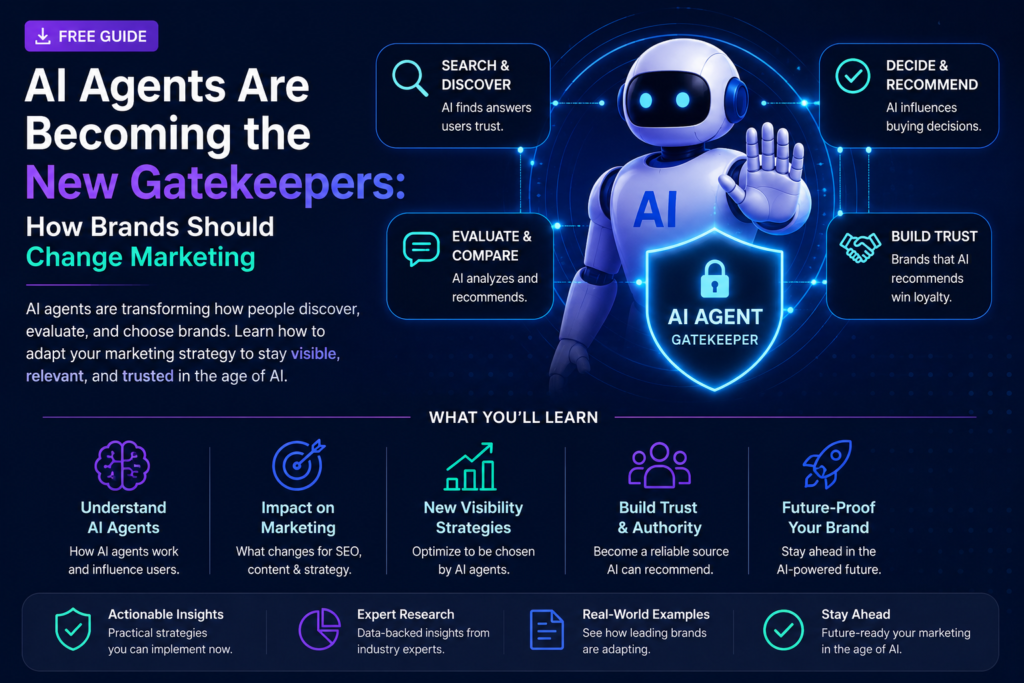
AI Agents Are Becoming the New Gatekeepers: How Brands Should Change Marketing
AI Agents Are Becoming the New Gatekeepers: How Brands Should Change Marketing Imagine you want to buy a pair of running shoes. In the past you might have searched Google opened websites compared prices, read reviews and finally chosen a product. Now an AI agent can do most of that work for you. You could simply say: “Find me comfortable running shoes under $100 that’re good for beginners.” Of giving you ten blue links an AI agent may understand your request, compare products look at reviews and prices and recommend a few options. This changes something, for marketers. Brands are no longer competing for peoples attention. They are increasingly competing to be understood trusted and recommended by AI agents. That is why AI agents are becoming the gatekeepers of marketing. For brands this means digital marketing strategies need to change. What Are AI Agents? An AI agent is an intelligence system that can understand a goal make decisions and take actions to help complete that goal. A traditional chatbot usually waits for you to ask a question and then gives an answer. An AI agent can potentially go further. For example an AI shopping agent could: Understand what a customer wants. Search for products. Compare options. Check prices and product information. Consider reviews and preferences. Recommend the choices. In some systems help complete the purchase. In words an AI agent acts more like a digital assistant that can make decisions rather than simply answering questions. This is one reason agentic AI is becoming important, in marketing. Why AI Agents Are Becoming the New Gatekeepers of Marketing For years platforms such, as search engines, social networks, marketplaces and app stores have acted as digital gatekeepers. These platforms helped decide what people saw. AI agents could add another layer to this process. Of a customer visiting ten websites the customer may ask an AI system to find the best option. The AI then decides which information, products, brands or services are worth showing. That creates a marketing challenge: If an AI agent does not understand or trust your brand the customer may never see your brand. This makes AI visibility increasingly important. Traditional marketing asks: “How do we get the customer to notice us?” AI‑era marketing also needs to ask: “How do we make sure AI systems understand, trust and recommend your brand?” How AI Agents Can Change the Customer Journey The traditional customer journey often looks like this: Search → Visit websites → Compare → Read reviews → Decide → Purchase With AI agents the journey could become: Ask AI → AI researches → AI compares → AI recommends → Customer decides → Purchase This may cut down the number of websites a person has to visit. That is a change, for marketers. I believe a brand may have a website, beautiful advertisements and thousands of visitors—but if AI agents become the first point of product discovery brands must also become easy for AI systems to understand. AI Shopping Agents Are Changing Product Discovery One of the examples is AI shopping agents, which are becoming popular. Suppose a customer says: “I need a laptop for college under ₹70,000 with battery life.” An AI-powered shopping system may compare products based on: – Price – Specifications – Reviews – Availability – Brand reputation – Customer requirements – Product features The customer does not necessarily need to visit every store I think that is a big relief. This is sometimes described as shopping or agentic commerce. The important point, for brands is simple: Product discovery can increasingly happen through AI recommendations of traditional search alone I see this as a shift. What Is Agentic Commerce? Agentic commerce is a type of commerce where AI agents can help customers discover, compare, select and potentially purchase products or services. Think of it as having a shopping assistant. For example: Customer: “I need a birthday gift, for my brother. My budget is ₹5,000. He loves fitness.” AI agent: AI agents could potentially understand the request identify products, compare options and present recommendations. This changes the role of marketing. Of only convincing a human customer brands may also need to provide information that AI agents can easily understand. Why Product Data Is Becoming More Important Imagine an AI agent is comparing fifty products. Which product is easier for the AI to understand? A product page that lists details such, as product name, price, features, size, material, availability, specifications, shipping information and customer reviews.. A page where the important information is buried inside images and unclear text? The first option is far easier for the AI to interpret. That is why having structured product data and content that the machine can read is becoming more and more important. Brands should make their product information: – Accurate – Complete – Consistent – structured – Easy to interpret I think that good product information is no longer only useful, for human shoppers. Good product information can also help digital systems understand what a product actually offers. How Brands Should Change Their Marketing Strategy So what do marketers really need to do? They should not stop using SEO or digital marketing. Instead they should make their plan bigger. A new plan can mix together: SEO plus AI SEO plus AEO plus GEO plus strong brand authority plus helpful content plus structured data Lets look at each part. 1. Make Your Website Easy for AI to Understand Your website should clearly explain: Who you are What you sell Who your products are, for What makes your products different How your products work Pricing Features asked questions Customer support information Do not hide important information from visitors. For example of writing: “Experience the ultimate next-generation performance.” Explain what that actually means. For example: “Our running shoes use foam and breathable mesh to reduce weight and improve comfort during everyday running.” The second sentence provides more useful information. 2. Create Machine-Readable Product Information If you sell products online review your product information carefully. Ensure